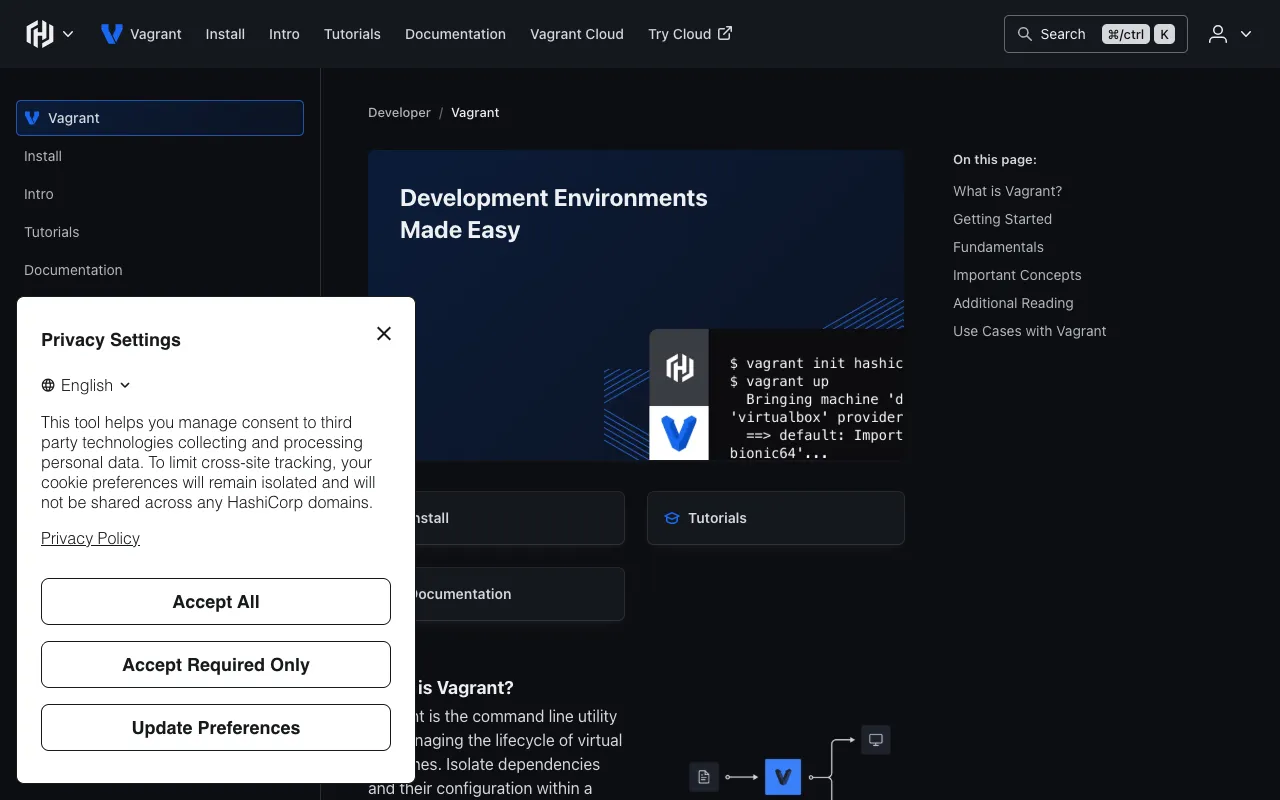
Vagrant – The Best Virtual Machine Management Tool for DevOps Engineers
Vagrant is the definitive open-source tool for DevOps engineers to create, configure, and manage lightweight, reproducible, and portable virtual machine environments. By codifying your development environment into a single configuration file, Vagrant eliminates the 'works on my machine' problem, ensuring consistency across your entire team from local development to production-like staging. It automates VM setup with providers like VirtualBox, VMware, and Docker, making it a cornerstone of modern infrastructure-as-code practices.
What is Vagrant?
Vagrant is a command-line tool that automates the lifecycle of virtual machines. It allows DevOps engineers and developers to define their required software, operating system, network, and storage configurations in a single, version-controlled file called a 'Vagrantfile.' With a simple `vagrant up` command, it automatically builds a complete, pre-configured development environment. This shifts infrastructure management from manual, error-prone setup to a reliable, scripted process, making it essential for continuous integration, testing, and collaborative development workflows.
Key Features of Vagrant
Infrastructure as Code with Vagrantfile
Define your entire VM environment—from the base box (OS image) to installed packages and network settings—in a declarative Ruby DSL. This Vagrantfile can be shared and versioned with your project code, guaranteeing every team member and CI server works in an identical environment.
Multi-Provider Support
Vagrant abstracts the underlying virtualization platform. It works seamlessly with VirtualBox, Hyper-V, VMware, and even Docker as providers. This gives DevOps teams flexibility and prevents vendor lock-in, allowing you to run the same environment on different hypervisors.
Automated Provisioning
Integrate with major configuration management tools like Ansible, Chef, Puppet, and Salt. Vagrant can automatically run these provisioners after the VM is created, installing and configuring all necessary software, saving hours of manual setup.
Portable & Shareable Boxes
Package a configured environment into a reusable 'box'—a template that can be distributed across your organization. This dramatically reduces onboarding time for new developers and ensures testing environments match production.
Who Should Use Vagrant?
Vagrant is indispensable for DevOps Engineers, SREs, and development teams. It's perfect for anyone needing consistent environments for development, testing, or staging. Specifically, use Vagrant if you manage microservices architectures, need to test infrastructure code, onboard new developers quickly, or run automated tests in isolated, production-like conditions. It bridges the gap between development and operations by making environment management a part of the software delivery process.
Vagrant Pricing and Free Tier
Vagrant is completely free and open-source software, released under the MIT License. There is no paid tier or premium version—all core features are available at no cost. HashiCorp, the creator, offers commercial enterprise support and additional features through HashiCorp Vagrant, but the standard Vagrant tool used by millions of developers remains 100% free to download and use.
Common Use Cases
- Setting up a consistent local development environment for a Python microservices project
- Automating the creation of disposable test environments for CI/CD pipelines
Key Benefits
- Eliminates environment inconsistencies, reducing 'it works on my machine' bugs by over 90%
- Accelerates developer onboarding from days to minutes with pre-configured, shareable boxes
Pros & Cons
Pros
- Completely free and open-source with a massive community
- Dramatically simplifies and automates VM lifecycle management
- Promotes Infrastructure as Code (IaC) best practices
- Excellent integration with major configuration management and CI/CD tools
Cons
- Primarily designed for development and testing, not for managing production infrastructure
- Initial learning curve to understand the Vagrantfile syntax and workflow
- Requires a base virtualization provider (like VirtualBox) to be installed separately
Frequently Asked Questions
Is Vagrant free to use?
Yes, Vagrant is completely free and open-source software. All its core features for building and managing virtual machine environments are available at no cost under the MIT License.
Is Vagrant good for DevOps engineers?
Absolutely. Vagrant is a foundational tool for DevOps. It enables Infrastructure as Code for development environments, ensures consistency across teams, integrates with provisioning tools like Ansible, and is crucial for creating reproducible build and test pipelines, directly supporting DevOps principles of automation and collaboration.
What is the difference between Vagrant and Docker?
Vagrant is a tool for managing virtual machines (full OS environments), while Docker manages containers (lightweight, process-isolated environments). Vagrant can actually use Docker as a provider. DevOps engineers often use Vagrant to create a consistent host environment that then runs Docker containers, or use it for scenarios requiring a full VM, like testing different operating systems.
Can Vagrant be used in production?
Vagrant is primarily designed for development, testing, and staging environments. It is not typically used to manage production infrastructure. For production, tools like Terraform (also from HashiCorp), AWS CloudFormation, or direct cloud provider APIs are more suitable for orchestrating scalable, durable infrastructure.
Conclusion
For DevOps engineers seeking to automate and standardize their development and testing infrastructure, Vagrant remains an essential, powerful, and free tool. By treating environments as code, it solves critical problems of inconsistency and waste in the software lifecycle. Whether you're building complex microservices, testing configuration scripts, or simply ensuring your team is aligned, Vagrant provides the robust, provider-agnostic foundation to make your virtual machine management efficient, repeatable, and collaborative. It's a must-have in any modern DevOps toolkit.