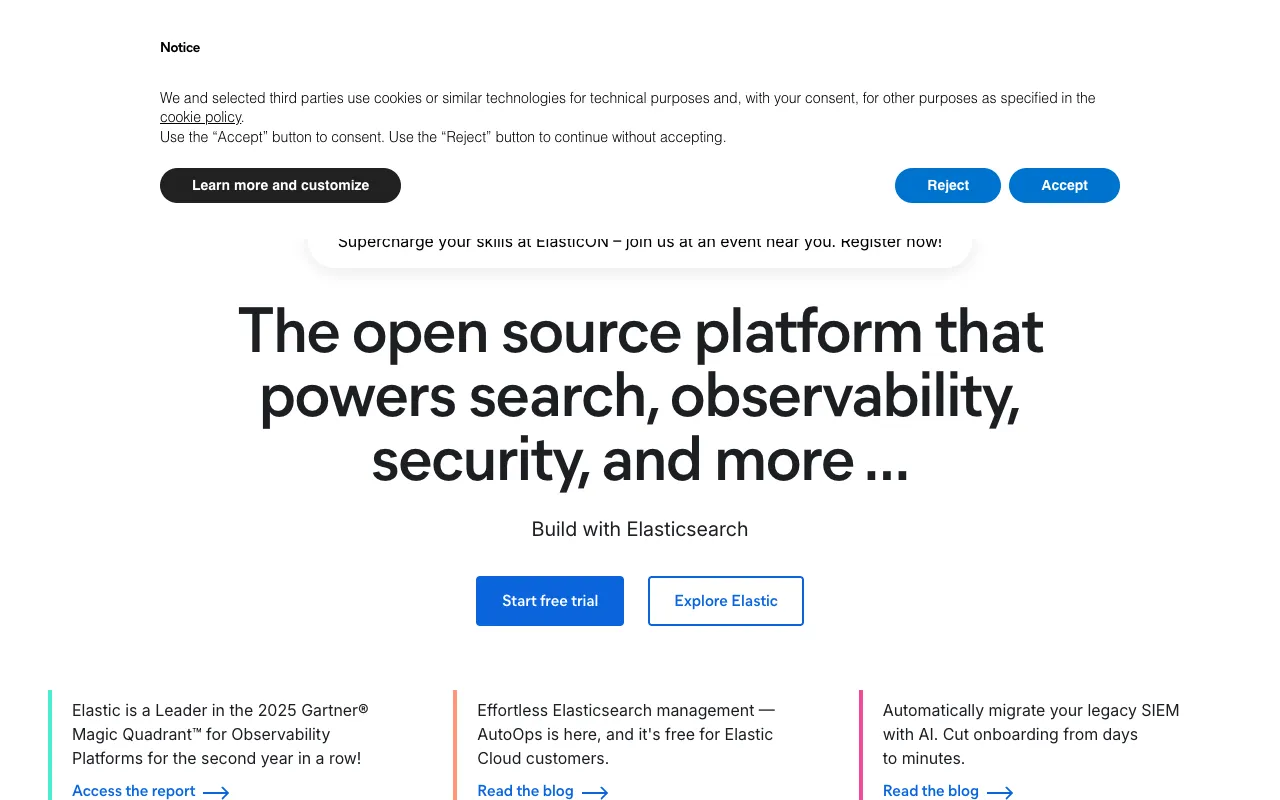
Elastic Stack (ELK) – The Premier Log Management & Analytics Platform for DevOps
The Elastic Stack (ELK Stack) is the industry-standard, open-source platform for centralized logging, search, and real-time analytics. Comprising Elasticsearch, Logstash, and Kibana, it provides DevOps engineers with a powerful, scalable solution for aggregating and analyzing machine data from any source. From troubleshooting application errors in real-time to monitoring infrastructure health and performing security analysis, ELK transforms raw data into actionable insights, making it an indispensable tool for modern observability and operational intelligence.
What is the Elastic Stack (ELK)?
The Elastic Stack, commonly referred to as the ELK Stack, is a cohesive set of open-source tools designed to handle data ingestion, search, analysis, and visualization at scale. Its core components work in tandem: Logstash ingests and processes data from various sources, Elasticsearch indexes and searches this data with incredible speed, and Kibana provides interactive dashboards and visualizations to explore it. Originally built for log analysis, its use has expanded to include application performance monitoring (APM), infrastructure metrics, and security information and event management (SIEM), forming the backbone of a comprehensive DevOps observability strategy.
Key Features of Elastic Stack (ELK)
Centralized Log Aggregation
Ingest logs from applications, servers, containers (like Docker and Kubernetes), and cloud services into a single, searchable platform. Logstash supports hundreds of plugins for parsing and enriching data before it's stored in Elasticsearch, eliminating the need to hunt through disparate log files.
Powerful Full-Text Search with Elasticsearch
Elasticsearch's distributed, RESTful search engine provides near real-time search capabilities across massive volumes of structured and unstructured data. Its powerful query language allows DevOps teams to pinpoint specific error messages, trace user sessions, or filter logs by any field with sub-second latency.
Interactive Dashboards with Kibana
Kibana turns your Elasticsearch data into rich visualizations, including histograms, line graphs, pie charts, and geospatial maps. Build custom dashboards to monitor key performance indicators (KPIs), application health, and system metrics, enabling proactive issue detection and team-wide visibility.
Scalability & High Availability
Built on a distributed architecture, the ELK Stack scales horizontally to handle petabytes of data. You can add nodes to your cluster to increase capacity and ensure high availability, making it suitable for enterprise-grade deployments and high-throughput environments.
Who Should Use Elastic Stack (ELK)?
The Elastic Stack is essential for DevOps engineers, SREs (Site Reliability Engineers), platform engineers, and security analysts. It's ideal for teams managing microservices architectures, cloud-native applications, or complex distributed systems who need a unified view of their operational data. Whether you're responsible for maintaining uptime, debugging performance bottlenecks, ensuring compliance, or investigating security incidents, ELK provides the centralized intelligence needed to maintain system reliability and performance.
Elastic Stack (ELK) Pricing and Free Tier
The core components of the Elastic Stack—Elasticsearch, Logstash, and Kibana—are open-source and free to use under the Elastic License or SSPL. This allows for unlimited data ingestion, search, and basic visualization at zero cost. Elastic also offers a free, managed cloud tier with limited resources to get started easily. For enterprise needs, Elastic provides commercial subscriptions (Elastic Cloud, Enterprise) that include advanced security features, machine learning, certified support, and managed services on major cloud platforms.
Common Use Cases
- Real-time application error monitoring and alerting for microservices
- Centralized logging and analysis for Kubernetes and Docker container environments
- Infrastructure performance monitoring and metric visualization for cloud servers
- Security log analysis and threat detection (SIEM) for compliance audits
Key Benefits
- Achieve full-stack observability by correlating logs, metrics, and traces in one platform.
- Reduce mean time to resolution (MTTR) for incidents with powerful, fast search across all operational data.
- Improve system reliability and performance through proactive monitoring with customizable dashboards and alerts.
Pros & Cons
Pros
- Powerful, flexible open-source core with a massive ecosystem of plugins and integrations.
- Industry-leading search and analytics performance capable of handling petabyte-scale data.
- Highly scalable and customizable to fit almost any logging, monitoring, or analytics use case.
Cons
- Initial setup and ongoing management of a self-hosted cluster requires significant operational expertise.
- Storage and indexing costs can grow significantly with high-volume data ingestion without proper lifecycle management.
Frequently Asked Questions
Is Elastic Stack (ELK) free to use?
Yes, the core open-source software is free to download, use, and modify. You can self-host the entire stack without licensing fees. Elastic also offers a free cloud tier with limited resources. Commercial features and managed services require a paid subscription.
Is Elastic Stack good for DevOps monitoring?
Absolutely. Elastic Stack is one of the most popular and capable platforms for DevOps monitoring. It excels at centralized log management, which is foundational for debugging and observability. When integrated with metrics (via Beats) and APM data, it provides a comprehensive view of application and infrastructure health, making it a cornerstone tool for modern DevOps and SRE practices.
Conclusion
For DevOps teams building resilient, observable systems, the Elastic Stack (ELK) remains a top-tier, foundational choice. Its powerful combination of flexible data ingestion, blazing-fast search, and rich visualization addresses the core challenge of managing complexity in modern IT environments. While operating a production cluster demands skill, the payoff in operational insight, troubleshooting speed, and proactive monitoring capability is immense. Whether you choose the open-source version or a managed offering, ELK provides the scalable intelligence platform necessary to maintain excellence in system reliability and performance.