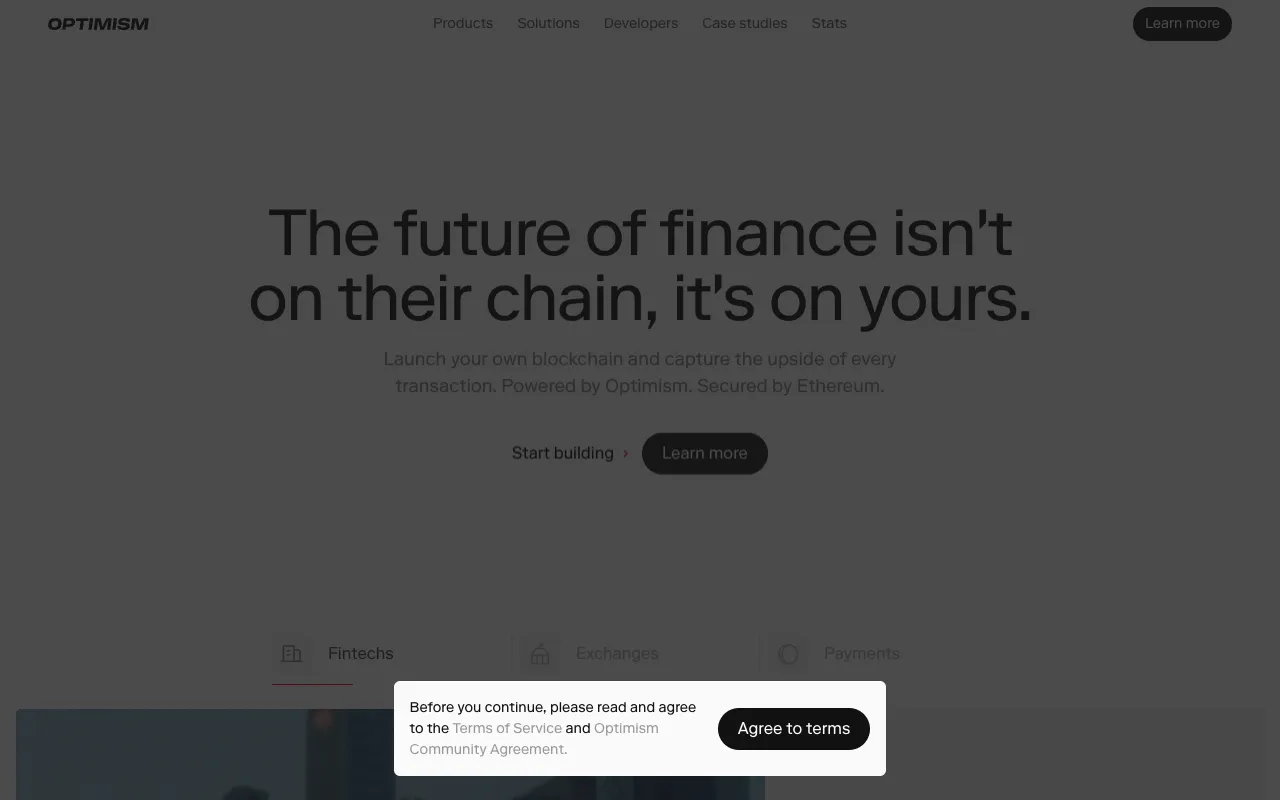
Optimism – The Best Ethereum Layer 2 Scaling Solution for Developers
Optimism is the premier Ethereum Layer 2 scaling platform that empowers developers to build decentralized applications (dApps) that are fast, affordable, and secure. By utilizing Optimistic Rollup technology, it dramatically reduces transaction fees and increases throughput while maintaining the robust security of the Ethereum mainnet. Its developer-first approach, comprehensive SDK, and EVM-equivalent environment make it the go-to choice for scaling DeFi, NFTs, and next-generation web3 projects without compromising on decentralization.
What is Optimism?
Optimism is a Layer 2 blockchain built on top of Ethereum, designed specifically to solve the network's scalability challenges of high gas fees and slow transaction times. It operates as an 'Optimistic Rollup,' a technology that executes transactions off-chain in a separate environment (the Layer 2) and then posts compressed transaction data back to the Ethereum mainnet (Layer 1). This architecture assumes transactions are valid ('optimistic') unless proven otherwise through a fraud-proof challenge window. The result is an Ethereum-compatible scaling solution that offers developers a seamless experience for deploying high-performance dApps at a fraction of the cost.
Key Features of Optimism
Optimistic Rollup Architecture
The core of Optimism's scaling power lies in its Optimistic Rollup design. By processing transactions off-chain and leveraging Ethereum for data availability and final settlement, it achieves massive scalability improvements—supporting thousands of transactions per second—while inheriting Ethereum's premier security and decentralization. This makes it one of the most secure and trust-minimized Layer 2 solutions available.
EVM Equivalence (OVM 2.0)
Optimism offers near-perfect Ethereum Virtual Machine (EVM) equivalence. This means developers can deploy their existing Ethereum smart contracts with minimal to no code modifications. Tools like Hardhat, Foundry, and Waffle work out-of-the-box, creating a frictionless migration path and dramatically reducing development time and complexity compared to other scaling solutions.
Developer-Friendly Stack & SDK
Optimism provides a comprehensive and well-documented software development kit (SDK) and toolchain. This includes the Optimism Bedrock upgrade, which introduced a modular codebase, improved node software, and enhanced cross-chain communication. Developers benefit from easy integration, robust testing frameworks, and clear documentation for building, deploying, and maintaining sophisticated dApps.
Super Low Transaction Costs
By compressing transaction data before settling it on Ethereum, Optimism reduces the gas cost burden by over 90% compared to mainnet transactions. This enables micro-transactions, complex DeFi interactions, and affordable NFT minting—unlocking new economic models and user experiences that are cost-prohibitive on Layer 1.
Who Should Use Optimism?
Optimism is ideal for Ethereum developers and projects facing scalability limits. This includes DeFi protocols needing cheaper swaps and lending operations, NFT platforms requiring affordable minting and trading, gaming dApps demanding high transaction throughput, and any web3 startup prioritizing user experience through low fees. It's also perfect for developers familiar with Ethereum's tooling who want to scale their applications with minimal learning curve and maximum security guarantees.
Optimism Pricing and Free Tier
Optimism itself is a public blockchain with no upfront cost or subscription fee to use. The primary cost for developers and users is the transaction fee (gas), which is significantly lower than Ethereum mainnet. There is a definitive free tier for development: developers can deploy and test their contracts for free on the Optimism Goerli testnet. For mainnet deployment, a small amount of ETH is required to pay for gas fees on the Optimism network, which are a tiny fraction of Layer 1 costs.
Common Use Cases
- Building a low-cost decentralized exchange (DEX) on Optimism
- Creating an affordable NFT marketplace with Optimistic Rollups
- Scaling a DeFi lending protocol with Layer 2 Ethereum compatibility
- Developing a high-throughput blockchain game on an EVM-equivalent L2
Key Benefits
- Reduce Ethereum gas fees by over 90% for end-users and developers
- Deploy existing Solidity smart contracts with almost no code changes
- Build scalable dApps that inherit Ethereum's battle-tested security
- Access a thriving ecosystem and user base within the Optimism Collective
Pros & Cons
Pros
- Extremely low transaction costs compared to Ethereum mainnet
- High security inherited from Ethereum via fraud proofs
- Superior developer experience with EVM equivalence
- Strong ecosystem and growing Total Value Locked (TVL)
- Backed by a credible team and clear roadmap (Bedrock, Superchain)
Cons
- Withdrawals from Layer 2 to Layer 1 have a 7-day challenge period for security
- The ecosystem, while large, is still smaller than Ethereum's mainnet
- Fraud proof system is more complex than ZK-Rollup validity proofs
Frequently Asked Questions
Is Optimism free to use?
Yes, there is no cost to start building on Optimism. You can deploy and test smart contracts for free on its testnet. For mainnet deployment, you only pay minimal transaction (gas) fees, which are drastically lower than Ethereum's, making it effectively free for many development and testing activities.
Is Optimism good for blockchain developers?
Absolutely. Optimism is considered one of the best tools for blockchain developers looking to scale Ethereum applications. Its EVM equivalence means you can use familiar tools like Solidity, Hardhat, and MetaMask. The comprehensive SDK, low fees, and strong security model provide an optimal environment for building production-ready DeFi, NFT, and gaming dApps.
What is the difference between Optimism and Arbitrum?
Both Optimism and Arbitrum are leading Optimistic Rollup solutions. A key technical difference is in their fraud proof implementation. Optimism uses a single-round, non-interactive fraud proof system, while Arbitrum uses a multi-round, interactive challenge system. For developers, the experience is very similar (EVM-compatible), but nuances in gas costs, ecosystem projects, and governance models (like the Optimism Collective's retroactive funding) may influence choice.
How do I bridge assets to Optimism?
You can bridge assets like ETH and ERC-20 tokens from Ethereum to Optimism using the official Optimism Bridge (bridge.optimism.io) or third-party bridges like Hop Protocol or Socket. The process is simple: connect your wallet, select the asset and amount, and confirm the transaction. Remember that bridging back to Ethereum involves the 7-day withdrawal delay for security.
Conclusion
For Ethereum developers prioritizing security, cost-efficiency, and a seamless development experience, Optimism stands out as a top-tier Layer 2 scaling solution. Its Optimistic Rollup technology delivers on the promise of scalable blockchain applications without forcing developers to abandon Ethereum's robust ecosystem and tooling. Whether you're building a new DeFi protocol, an NFT platform, or a web3 game, Optimism provides the performance and economic model needed for mass adoption. Start building on the testnet today to experience the future of scalable Ethereum development.